Why AM and PM Routines Serve Different Purposes
Skincare timing isn't arbitrary. Your skin behaves differently depending on the time of day, largely because it follows the body's natural circadian rhythm - the internal 24-hour cycle that influences everything from hormone release to cell activity.
During the day, skin is in a defensive mode. It's managing exposure to UV radiation, environmental pollutants, and free radicals - unstable molecules that damage skin cells. In the evening and overnight, the skin shifts into a regenerative mode: cell turnover accelerates, collagen production increases, and the skin barrier works to repair itself.
This biological difference is exactly why applying the same products morning and night - or mixing up when you use certain ingredients - can leave results on the table, or even cause harm. Understanding what each window is designed for helps every product do its job more effectively.
For a clear breakdown of what each core product step actually does, see our step-by-step product guide.
What Your Morning Routine Should Accomplish
The central goal of an AM routine is protection. Every product you apply in the morning should either prepare a clean canvas, support the skin barrier, or shield skin from incoming stressors.
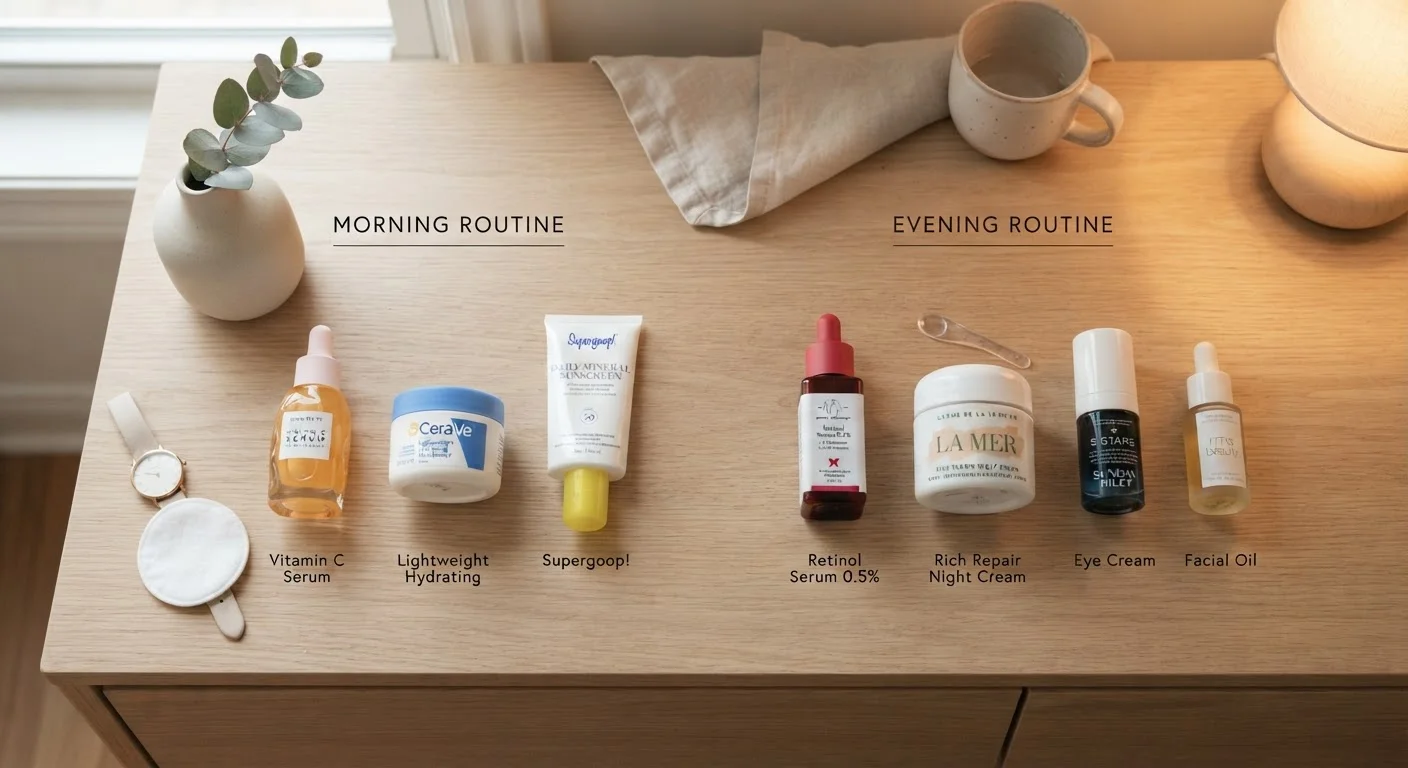
A functional morning routine typically includes:
- Gentle cleanser - to remove overnight oils and product residue without stripping the skin.
- Lightweight moisturizer - to reinforce the barrier and keep skin hydrated through the day.
- Broad-spectrum SPF - the most important step in any AM routine. UV exposure is the leading external cause of premature skin aging, and sunscreen is the only product clinically proven to mitigate that damage.
Antioxidants, such as vitamin C serums, pair well with mornings because they neutralize free radicals and work synergistically with SPF. They're generally light enough not to interfere with daytime wear.
Vitamin C Works Best in the Morning
Vitamin C serums are most effective when applied as part of your AM routine. They neutralize free radicals generated by UV exposure and pollution, and studies suggest they can enhance the protective effect of sunscreen when layered underneath it. Apply vitamin C after cleansing and before SPF for the best results.
What generally doesn't belong in the morning: retinoids, strong chemical exfoliants (AHAs and BHAs), and heavy occlusive treatments. These either break down in sunlight, increase photosensitivity, or are simply more effective when skin is in repair mode.
What Your Evening Routine Should Accomplish
Your PM routine has one primary job: support the skin's overnight repair process. Without the pressure of sun protection, you have more flexibility - and in some cases, more responsibility - to use ingredients that are too potent or light-sensitive for daytime.
A functional evening routine typically includes:
- Thorough cleansing - more important at night, since it removes accumulated sunscreen, makeup, pollution, and sebum that can clog pores and impair overnight recovery.
- Active treatments - retinoids (vitamin A derivatives), exfoliating acids, and peptides perform best at night. Retinoids in particular stimulate collagen production and accelerate cell turnover, processes that align with the skin's own nighttime cycle.
- Richer moisturizer or occlusives - nighttime is when a heavier cream, facial oil, or occlusive layer helps lock in moisture and support barrier repair without the heaviness being an issue under makeup.
| Morning Routine | Evening Routine | |
|---|---|---|
| Primary goal | Protect from UV and environmental damage | Support overnight skin repair and renewal |
| Skin's biological state | Defensive mode | Regenerative mode |
| Key products | SPF, antioxidant serum, light moisturizer | Retinoid, exfoliant, richer moisturizer |
| Retinoids | Not recommended | Optimal time to apply |
| Chemical exfoliants (AHA/BHA) | Generally avoid | Effective and appropriate |
| Sunscreen | Essential - final step | Not needed or beneficial |
| Cleansing importance | Moderate - removes overnight residue | High - removes daily buildup before repair |
If you're working with multiple active ingredients, it's worth understanding which ones can safely be layered. Our guide on ingredient combinations to use and avoid can help you build a safe PM routine.
Common Timing Mistakes That Undermine Results
Even with quality products, routine timing errors are surprisingly common - and some can cause real irritation or reduce effectiveness significantly.
- Applying SPF at night: Sunscreen is formulated to protect against UV light. Using it overnight serves no purpose and can feel heavy or pore-clogging for some skin types.
- Using retinol in the morning: Retinoids degrade in UV light and increase photosensitivity. Without strict sun protection, daytime use raises the risk of irritation and sun damage - and the ingredient simply won't perform as intended.
- Over-exfoliating across both routines: Layering exfoliating acids morning and night - or using them daily without rest - is one of the most common habits that damages the skin barrier over time. See our article on routine habits that backfire for a fuller breakdown.
- Skipping the nighttime cleanse: Going to bed without removing the day's buildup is a primary driver of congestion and breakouts, regardless of skin type.
If you're building a routine from the ground up and unsure where to start, our beginner's guide to skincare walks through the essentials step by step.
This article is for general informational purposes only and does not constitute medical or dermatological advice. Consult a licensed dermatologist if you have specific skin concerns or conditions.