The Hidden Financial Logic of Small Repairs
Most expensive home repair bills don't start as expensive problems. They start as a loose shingle, a slow drip under a sink, or a hairline crack in a foundation wall - problems small enough to feel ignorable. Homeowners defer these tasks for understandable reasons: time constraints, budget pressures, or the optimistic assumption that nothing will get worse.
That assumption is where deferred maintenance becomes costly. Building systems are interconnected. Water that enters through a failed roof joint doesn't stay in one spot - it migrates along framing, saturates insulation, and eventually reaches interior finishes, electrical systems, or floor assemblies. What begins as a few hundred dollars in roofing repair can quietly become a multi-thousand-dollar remediation project.
For a structured approach to staying ahead of these issues, the annual home maintenance calendar offers a month-by-month breakdown of tasks that keep problems from compounding.
1%-3%
Recommended annual home maintenance budget
Many housing finance guides suggest budgeting one to three percent of a home's value annually for routine maintenance and upkeep to avoid deferred repair accumulation.
$10,000+
Average cost of mold remediation in severe cases
According to home restoration industry data, extensive mold remediation in wall cavities and structural framing can exceed ten thousand dollars, often originating from an untreated slow leak.
Up to 10%
Resale value reduction from deferred maintenance
Real estate professionals commonly report that homes with visible deferred maintenance attract offers significantly below comparable well-maintained properties in the same market.
Common Maintenance Mistakes and How to Avoid Them
Understanding where homeowners most frequently go wrong is the first step toward protecting your investment. The mistakes below represent some of the most common - and most financially damaging - patterns of deferred maintenance seen in residential properties across the country.
Ignoring small roof damage after a storm or seasonal wear.
Why it happens: Roof problems are out of sight, and homeowners often assume damage is cosmetic or assume the roof still has years of life left.
Leaving gutters clogged season after season without cleaning or repair.
Why it happens: Gutter cleaning feels like a low-priority chore, and blockages are rarely visible from ground level until overflow is obvious.
Postponing HVAC servicing because the system appears to be running.
Why it happens: Systems that are still functioning feel like a low priority. Homeowners often delay until a complete failure forces an emergency service call.
Sealing off or ignoring foundation cracks as purely cosmetic.
Why it happens: Hairline cracks are common in settling homes and are often dismissed as normal, which some are - but others indicate active movement or water infiltration.
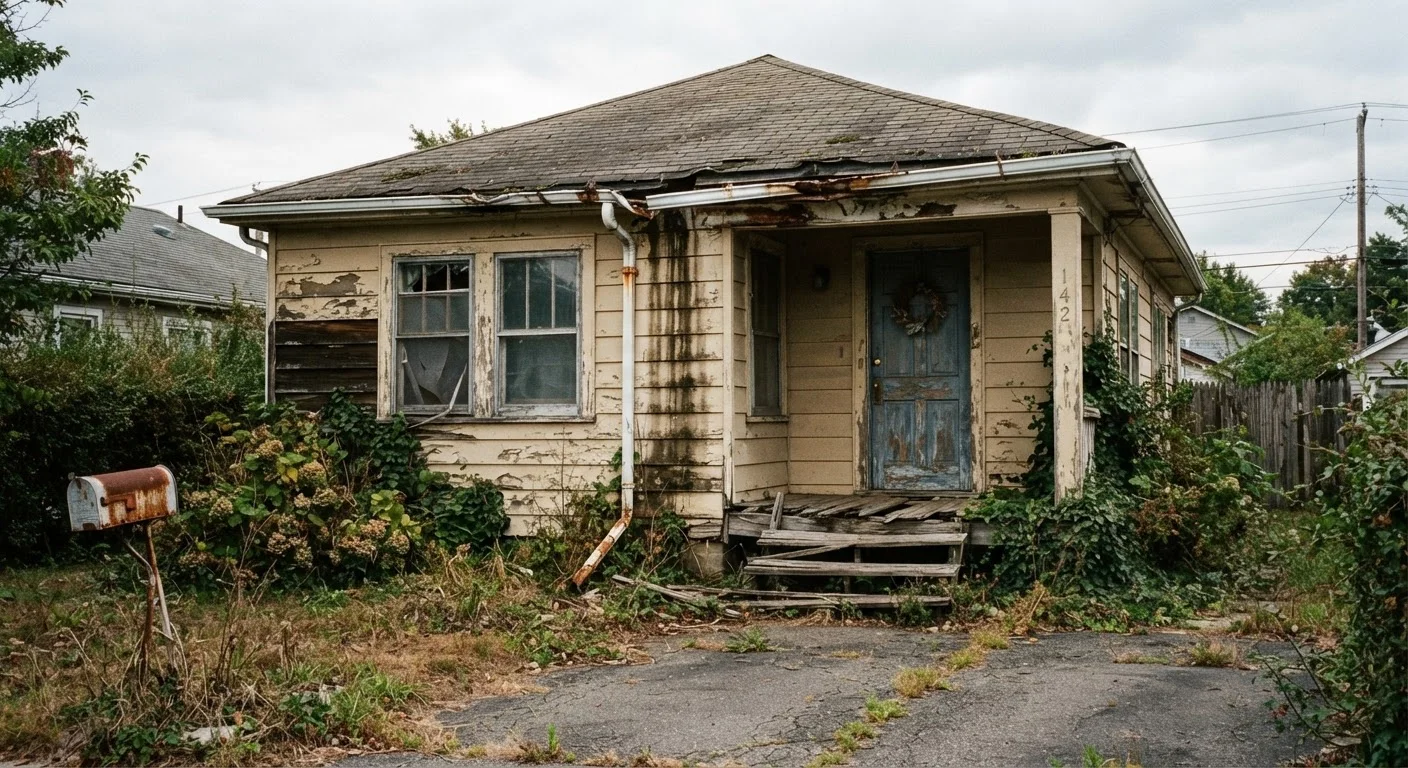
Delaying exterior caulking and paint maintenance on wood surfaces.
Why it happens: Peeling paint appears to be an aesthetic problem, and homeowners often defer it as a non-urgent cosmetic expense.
Water Damage Spreads Faster Than Expected
A small roof leak or plumbing drip can saturate insulation, rot framing, and cultivate mold within weeks rather than months. Mold remediation alone can run from several hundred to tens of thousands of dollars depending on extent and location. Never assume a minor water issue is stable without a professional inspection.
The Compounding Cost of Waiting
Deferred maintenance doesn't just create larger repair bills - it creates cascading failures. A neglected HVAC system runs less efficiently, raising energy costs before it finally breaks down. Ignored caulking failures let moisture into wall assemblies, which encourages wood rot, which can compromise insulation, which raises heating and cooling costs further. Each deferred item adds pressure to adjacent systems.
Deferred Maintenance Affects Resale Value
Home inspectors are trained to identify signs of neglected upkeep, and their findings directly influence buyer offers and lender approvals. Serious deficiencies can cause a sale to fall through entirely or force a seller to accept significant price reductions. Addressing known issues before listing is almost always less costly than negotiating under pressure.
Owners of older properties face this dynamic with particular intensity. Older homes carry distinct upkeep challenges that newer construction doesn't - aging materials, outdated systems, and decades of deferred work by previous owners that may not surface until a new owner is living in the home.
The financial principle here mirrors other domains of routine upkeep. Just as skipping oil changes leads to far greater engine repair costs, postponing home maintenance converts inexpensive preventive tasks into expensive corrective ones. Consistent, scheduled attention to your property is not just good practice - it is one of the most reliable forms of financial protection available to a homeowner.
This article provides general home maintenance education and is not a substitute for professional inspection or advice from a licensed contractor. Local building codes, permit requirements, and inspection standards vary; always verify applicable requirements in your area before undertaking repair work.