Smoke Detectors: Testing, Placement, and Replacement
Smoke detectors are among the most straightforward life-safety devices in a home - but only when they're maintained properly. Here's what every homeowner should know.
Testing and Battery Replacement
Test every smoke detector once a month by pressing the test button until the alarm sounds. Replace batteries at least once a year - many homeowners tie this to a seasonal time change as a reminder. Detectors with sealed 10-year batteries don't require annual battery swaps but still need monthly testing.
Replacement Timeline
Smoke detectors have a finite lifespan. The NFPA recommends replacing smoke alarms every 10 years from the manufacture date, which is stamped inside the unit. Ionization and photoelectric are the two main sensor types; many fire safety professionals recommend dual-sensor or interconnected alarms for broader coverage.
Placement Guidelines
- Install on every level of the home, including the basement.
- Place inside each sleeping room and outside sleeping areas.
- Mount on the ceiling or high on a wall (within 12 inches of the ceiling).
- Keep detectors at least 10 feet from cooking appliances to reduce nuisance trips.
For broader context on home systems, see the complete homeowner's maintenance reference.
Carbon Monoxide Alarms: What Makes Them Different
Carbon monoxide (CO) is odorless and colorless, making a functioning alarm your only reliable early warning. CO alarms detect a different hazard than smoke detectors and follow slightly different rules.
Ionization smoke detector
A type of smoke alarm that uses a small radioactive source to detect the tiny particles produced by fast-flaming fires. Responds quickly to open, active flames but may be slower to detect slow, smoldering fires.
Photoelectric smoke detector
Uses a light beam and sensor to detect the larger smoke particles typical of slow, smoldering fires. Generally more responsive to this fire type than ionization detectors.
Carbon monoxide (CO)
A colorless, odorless gas produced by incomplete combustion of fuels such as natural gas, propane, oil, wood, and gasoline. Exposure can be life-threatening at elevated concentrations.
Circuit breaker
An automatic switch in the electrical panel that interrupts current flow when a circuit is overloaded or a fault is detected. It can be manually reset after the underlying issue is addressed.
Electrochemical sensor
The detection technology used in most CO alarms. It generates a small electrical current in response to CO exposure, triggering the alarm. The sensor degrades over time, which is why CO alarms have a defined replacement schedule.
Where CO Alarms Are Required
Requirements vary by state, but the general best practice mirrors NFPA 720 guidelines: install a CO alarm on every level of the home and within 10 feet of each sleeping area. Homes with fuel-burning appliances (furnaces, water heaters, gas stoves, fireplaces) or attached garages carry the highest risk.
Testing and Lifespan
Test CO alarms monthly using the test button. Most CO alarms last 5 to 7 years before the electrochemical sensor degrades - check the manufacture date on your unit and replace accordingly. Unlike smoke detectors, CO alarm end-of-life is often signaled by a distinct chirp pattern described in the manufacturer's manual.
Warning Signs That Demand Immediate Action
- Alarm sounding continuously: Evacuate immediately and call 911 from outside. Do not re-enter.
- Multiple residents or pets showing symptoms (headache, dizziness, nausea): Treat as a CO emergency.
- Unit chirping at end-of-life: Replace the alarm - do not silence and ignore.
If your home is older, CO risks from aging fuel-burning equipment can be more significant. The maintenance realities of older homes covers these considerations in more depth.
Electrical Panels: Recognizing Hazards and Knowing When to Call a Pro
Your electrical panel distributes power throughout the home and acts as the first line of protection against overloads. Homeowners should be able to identify warning signs - but most panel work requires a licensed electrician.
Panel Work Requires Licensed Professionals
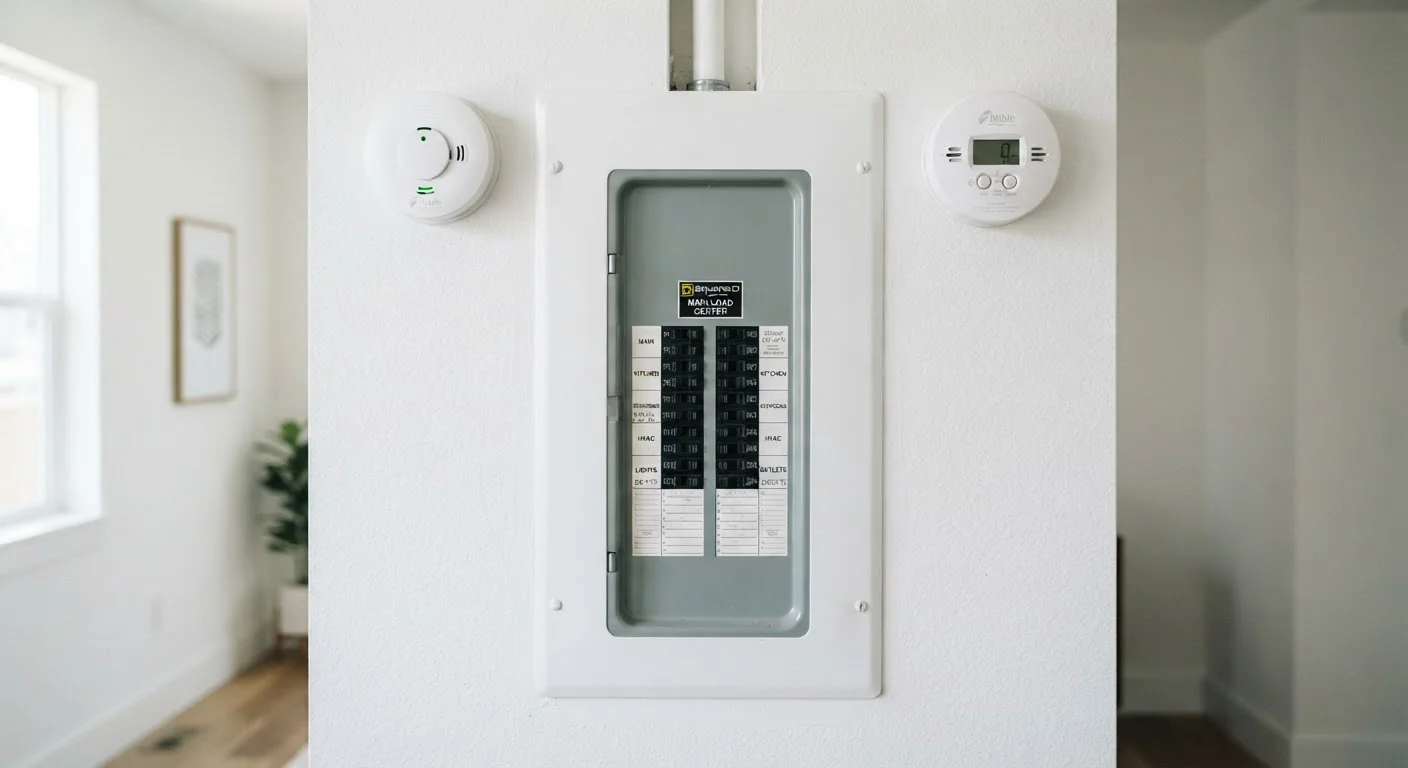
Opening an electrical panel exposes live bus bars that remain energized even when the main breaker is off. In most US jurisdictions, electrical panel work beyond resetting a breaker requires a licensed electrician and a permit. Always verify local code requirements before beginning any electrical project, and never attempt work you are not qualified to perform safely.
Common Warning Signs
- Frequently tripping breakers: Occasional trips are normal; repeated trips on the same circuit suggest overloading or a fault.
- Burning smell or scorch marks: Indicates heat damage - call an electrician immediately.
- Flickering or dimming lights: Can signal loose connections or an overloaded circuit.
- Breakers that won't reset or stay on: A breaker that trips immediately after resetting points to a serious fault.
- Panel feels warm to the touch: Panels should not generate noticeable heat under normal operation.
When Replacement or Upgrades Are Typically Needed
Panels generally last 25 to 40 years, though lifespan depends on load demands and environmental factors. Older homes with fuse boxes or panels from brands known to have safety recalls may warrant professional evaluation sooner. Adding high-draw appliances (EV chargers, HVAC upgrades) often requires a panel capacity review.
What Homeowners Should - and Shouldn't - Do
Resetting a tripped breaker is typically within a homeowner's scope. Any task that involves opening the panel, adding circuits, replacing breakers, or wiring new outlets requires a licensed electrician and, in most jurisdictions, a permit. Never bypass a breaker or insert a higher-amperage fuse than the circuit is rated for - this removes a critical safety control.
For a broader look at which maintenance tasks are safe to handle yourself versus when to bring in a professional, see the HVAC maintenance guide for a comparable systems-based approach.