
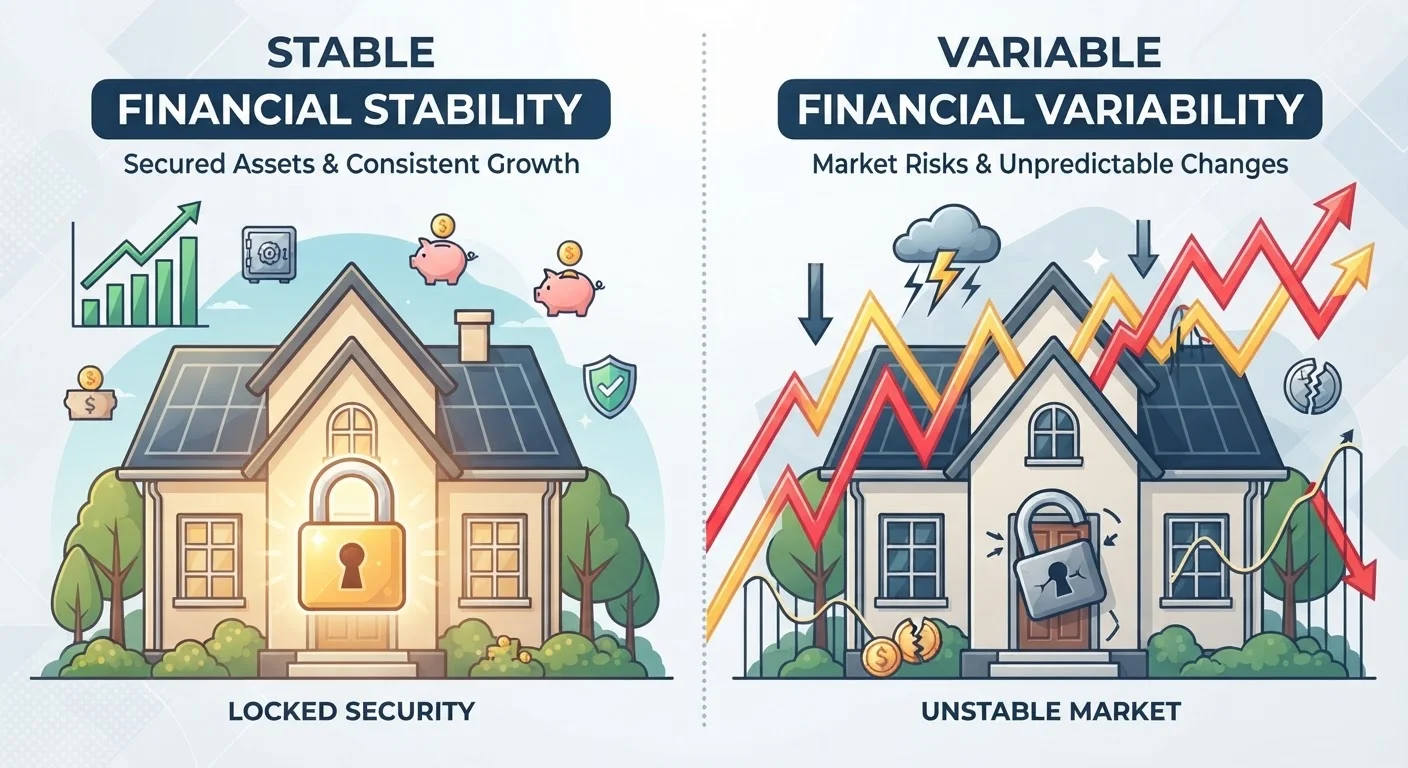
How Each Mortgage Structure Works
A fixed-rate mortgage charges the same interest rate for the entire repayment term - typically 15 or 30 years. Because neither the rate nor the principal-and-interest portion of the payment ever changes, you know exactly what you owe each month from the first payment to the last. This stability is the structure's defining feature.
An adjustable-rate mortgage (ARM) starts with a fixed introductory rate - common configurations include 5/1, 7/1, and 10/1 ARMs. The first number is the years the initial rate holds; the second is how often the rate adjusts afterward (usually annually). Once the fixed period ends, the rate resets based on a benchmark index - such as the Secured Overnight Financing Rate (SOFR) - plus a lender-set margin. ARMs include rate caps that restrict how much the rate can rise at each adjustment and over the loan's lifetime, which limits (though does not eliminate) payment risk. See how this compares to budgeting for fixed versus variable expenses more broadly.
| Criterion | Fixed-Rate Mortgage | Adjustable-Rate Mortgage (ARM) |
|---|---|---|
| Interest rate | Locked for the full loan term | Fixed initially, then adjusts periodically |
| Monthly payment stability | Completely predictable | Can rise or fall after fixed period |
| Initial rate level | Typically higher than ARM intro rate | Usually lower than fixed rate |
| Common loan terms | 15-year, 30-year | 5/1, 7/1, 10/1 configurations |
| Rate caps | Not applicable | Per-adjustment and lifetime caps apply |
| Best time horizon | Long-term ownership (10+ years) | Shorter-term ownership (5-7 years) |
| Primary risk | Opportunity cost if rates fall | Payment increase after fixed period |
| Budgeting ease | Very straightforward | Requires planning for future scenarios |
Where Each Structure Carries Risk
The primary risk with a fixed-rate mortgage is opportunity cost. If you lock in a rate when market rates are high and rates later fall significantly, you will overpay relative to what a lower rate would have cost - unless you refinance, which carries its own closing costs and qualification requirements.
ARMs carry payment risk. After the introductory period, your rate and payment can rise. Even with caps in place, a worst-case adjustment on a 5/1 ARM could add hundreds of dollars to a monthly payment, depending on loan size. Borrowers who underestimate their time horizon or overestimate future refinancing ability can find themselves facing higher payments than they planned for.
30 years
Most common fixed-rate mortgage term in the US
The 30-year fixed-rate mortgage has historically been the dominant loan product among US homebuyers, according to Federal Reserve and mortgage industry data.
5/1 ARM
Most frequently chosen ARM configuration
Among adjustable-rate products, the 5/1 ARM - which holds its initial rate for five years - has consistently been the most widely originated ARM structure in the US market.
2-3%
Typical lifetime rate cap above initial ARM rate
Federal consumer protection regulations require ARMs to disclose caps; lifetime caps on many conventional ARMs are commonly structured at 5-6 percentage points above the initial rate, though terms vary by lender and product.
It is also worth noting that ARMs were involved in widespread distress during the 2007-2008 housing crisis - not because the structure is inherently problematic, but because many loans at that time lacked adequate caps or were issued without proper income verification. Modern ARMs include stronger consumer protections under federal rules established after that period.
Choosing the Right Structure for Your Situation
Your time horizon is the most useful starting point. If you are confident you will own the home for only five to seven years, an ARM's lower introductory rate can produce meaningful interest savings over that window. If you intend to stay long-term, the certainty of a fixed rate typically outweighs any upfront savings an ARM provides.
Your income stability and risk tolerance matter equally. A buyer with highly variable income - freelancers, business owners, commission-based workers - may find payment predictability more valuable than the potential savings of a lower ARM rate. Conversely, a buyer with strong income growth prospects and liquid reserves may be better positioned to absorb an adjustment if it occurs.
Consider the broader context of renting versus buying before committing to either mortgage structure - your decision to own at all shapes how these trade-offs land. Also, loan type and rate structure are separate decisions; see our comparison of conventional and FHA loans for guidance on the underlying loan program that best matches your financial profile.
This article provides general educational information about mortgage structures and is not personalized financial or lending advice. Consult a licensed mortgage professional or financial adviser to evaluate options based on your specific financial situation.