Water Is an Essential Nutrient
When most people think about nutrition, they picture macronutrients and vitamins - protein, carbohydrates, iron, calcium. Water rarely makes the list, even though nutrition science has long recognized it as an essential nutrient. The body cannot synthesize adequate water on its own, and it is required for nearly every physiological function, from digestion and circulation to temperature regulation and cellular repair.
Framing hydration as a nutrition issue rather than a comfort issue shifts how we approach it. Drinking enough water is not about satisfying thirst after it appears - it is about supplying the body with the medium in which all nutritional processes occur. Without sufficient fluid, the machinery of nutrition simply cannot run effectively.
~20%
Daily water intake from food sources
According to the National Academies of Sciences, Engineering, and Medicine, approximately 20% of total daily water intake for most adults comes from food rather than beverages.
1-2%
Fluid loss that impairs cognitive performance
Studies cited in nutrition and sports medicine literature suggest that fluid losses as small as 1-2% of body weight can noticeably reduce concentration, mood, and physical output.
3.7 L
Recommended total daily water intake for adult men
The National Academies' Dietary Reference Intakes set an adequate intake of 3.7 liters per day total water for adult men and 2.7 liters for adult women, including water from all food and beverage sources.
How Hydration Affects Nutrient Absorption and Metabolism
The link between water and nutrient absorption is direct and well-established. Water-soluble vitamins - including vitamin C and the full spectrum of B vitamins - depend on adequate hydration to dissolve and move through the digestive tract into the bloodstream. Electrolytes such as sodium, potassium, and magnesium require water to cross cell membranes and carry out their roles in nerve signaling and muscle function.
Fiber digestion also depends on water. Soluble fiber absorbs water to form a gel that slows glucose absorption and supports gut health. Without sufficient hydration, fiber cannot perform this function properly, and gut motility slows, increasing the risk of constipation. Many adults who consume fiber-rich diets but remain under-hydrated may find themselves experiencing digestive discomfort as a result. For a broader look at nutrients commonly missing from American diets, see which nutrients most US adults under-consume.
“Water is the forgotten nutrient. It is involved in every chemical reaction in the body, and yet it rarely appears on the nutritional agenda the way vitamins and minerals do.”
— Walter Willett, Professor of Epidemiology and Nutrition, Harvard T.H. Chan School of Public Health
Thirst Is a Late Warning Signal
One of the most practical reasons to treat hydration as a nutritional priority is that thirst is an imprecise and delayed signal. Research indicates that mild dehydration - as little as 1-2% of body weight in fluid loss - can impair mood, concentration, and physical performance before most people register feeling thirsty. For older adults, the thirst mechanism becomes less sensitive with age, meaning reliance on it alone creates a meaningful gap in fluid intake.
Dehydration is also frequently misread as hunger. The hypothalamus, which governs both hunger and thirst signals, can blur these cues, leading people to reach for food when fluid is what the body actually needs. This has real implications for appetite regulation and energy balance - two pillars of overall dietary health.
Make Hydration a Dietary Habit, Not a Reaction
Rather than waiting for thirst, try anchoring water intake to existing meal and snack routines - a glass before each meal is a straightforward starting point. Including high-water-content foods like cucumbers, melons, and citrus in your regular diet adds fluid intake alongside micronutrients, making hydration a natural part of your nutritional pattern rather than a separate task.
Practical Ways to Integrate Hydration Into Your Diet
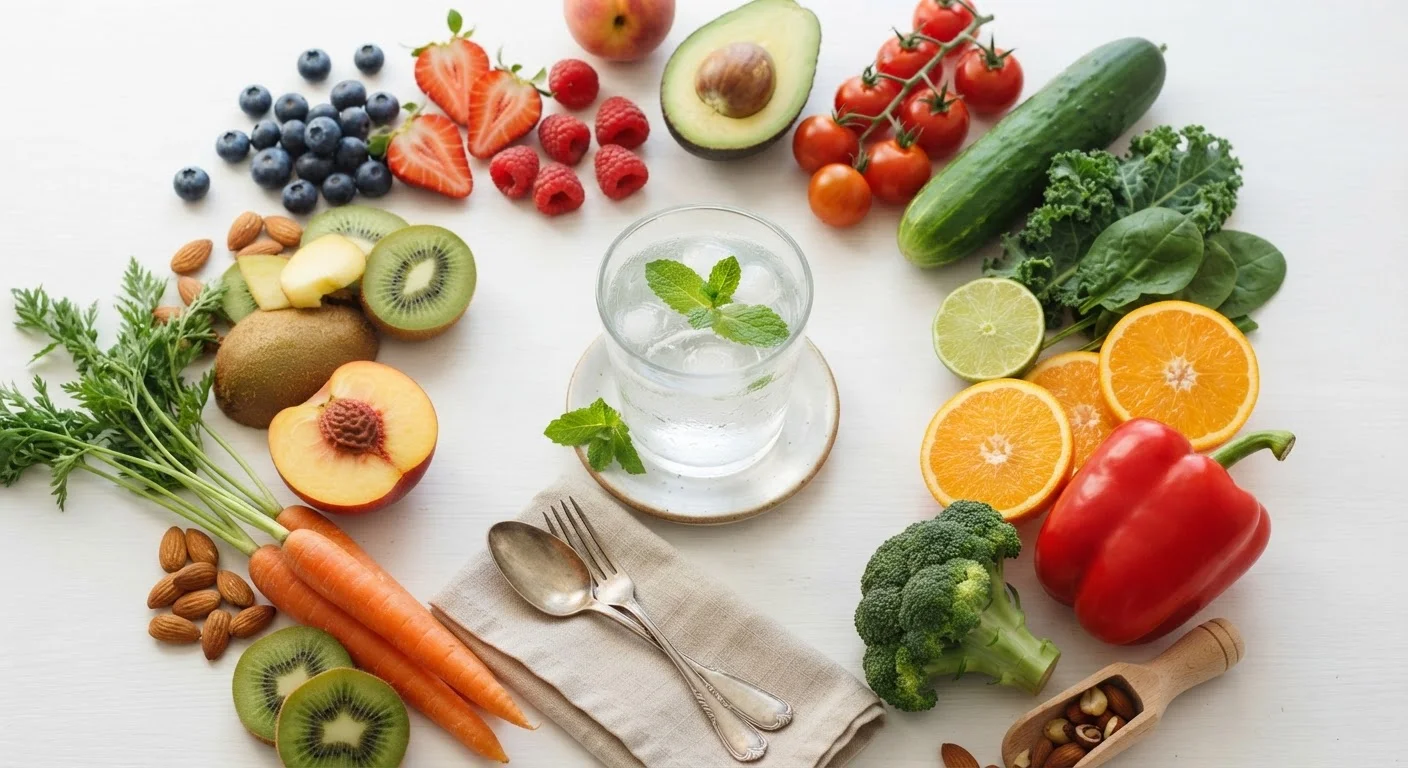
Approaching hydration through a dietary lens opens up practical strategies beyond simply drinking more plain water. Whole foods contribute meaningfully to fluid intake - cucumbers, strawberries, oranges, celery, and leafy greens are composed of 85-95% water by weight. Building a diet rich in these foods simultaneously supports micronutrient intake and hydration.
Timing matters, too. Consuming water before and during meals supports the digestive process and may help with portion awareness. Starting the day with a glass of water before coffee is a simple habit that front-loads hydration before daily activity begins. Herbal teas and broth-based soups are additional dietary sources that support fluid balance without added sugar.
Urine color remains one of the most accessible self-monitoring tools: pale yellow generally indicates adequate hydration, while dark yellow or amber suggests the need for more fluids. These are general reference points, not diagnostic criteria - certain medications and supplements can affect urine color independently of hydration status.
This article is for general informational and educational purposes only and does not constitute medical or nutritional advice. Consult a qualified healthcare professional for guidance tailored to your individual health needs.