
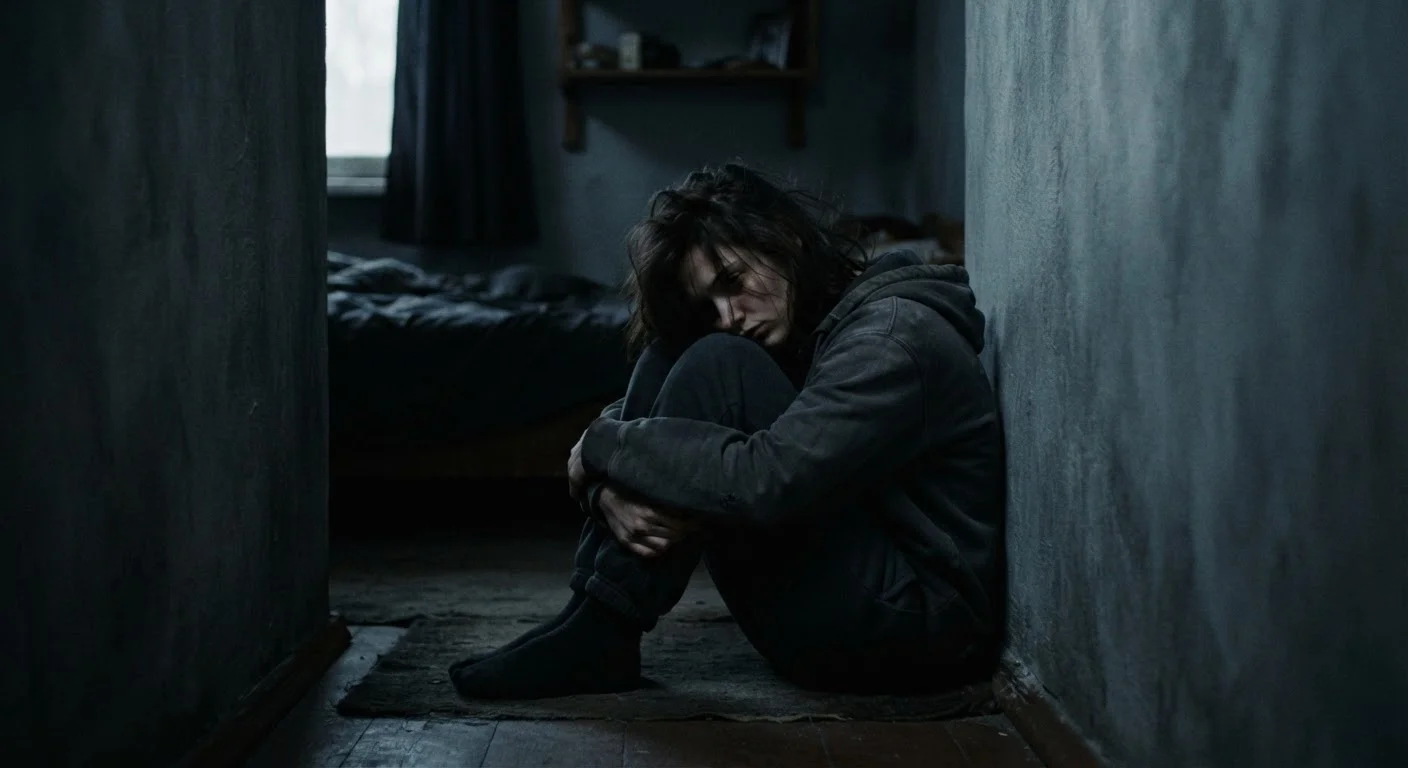
The Anxiety Avoidance Trap
When anxiety spikes, pulling away from whatever triggered it feels instinctively sensible. Skipping the crowded party, putting off the difficult conversation, or staying home instead of driving on the highway all bring immediate calm. But behavioral science tells a different story about what is actually happening underneath that relief.
Avoidance is one of the primary mechanisms that sustains and amplifies anxiety disorders. Each time a person sidesteps an anxiety-provoking situation, the brain records a lesson: the escape worked. The threat level assigned to that situation does not decrease - it increases. Over time, the range of situations that trigger anxiety tends to broaden, and the threshold for tolerating discomfort narrows. Understanding this cycle is foundational to breaking it.
This is general health information intended for educational purposes, not a substitute for professional mental health evaluation or treatment. If anxiety is significantly affecting your daily life, please consult a qualified mental health professional.
Common Mistakes That Deepen the Anxiety Cycle
Most avoidance patterns are unintentional. They develop gradually, often disguised as practical decisions or self-care. The mistakes below reflect how well-meaning coping strategies can quietly work against recovery.
Treating avoidance as a long-term coping strategy rather than a short-term patch.
Why it happens: Immediate relief powerfully reinforces the behavior, making avoidance feel effective even as it compounds the underlying problem.
Using reassurance-seeking as a substitute for tolerating uncertainty.
Why it happens: Asking others to confirm that everything will be fine temporarily reduces distress, creating a dependency similar to other avoidance behaviors.
Misidentifying safety behaviors as healthy coping.
Why it happens: Behaviors like always sitting near an exit, never going anywhere alone, or compulsively checking plans feel protective rather than restrictive, so they rarely get questioned.
Avoiding internal experiences, such as physical sensations or anxious thoughts, rather than only external situations.
Why it happens: People often focus avoidance on outside triggers and miss that resisting the bodily sensations of anxiety - a racing heart, shallow breath - also maintains the fear.
Assuming that low anxiety after avoidance means the problem is resolved.
Why it happens: Calm following avoidance is real and noticeable, so it is easy to interpret as evidence that the situation was genuinely dangerous and the retreat was correct.
When Avoidance Becomes an Expanding Barrier
Avoidance tends to generalize. What begins as avoiding one specific situation - a particular highway or a crowded grocery store - can spread to related contexts until the restricted zone becomes very large. If you notice your world getting smaller rather than larger over months, this is a clinically significant warning sign worth discussing with a mental health professional. Do not wait for avoidance to be comprehensive before seeking help.
What the Research Points Toward Instead
Decades of clinical research support a different approach: exposure. Cognitive behavioral therapy (CBT) and exposure-based therapies work by encouraging gradual, manageable contact with feared situations rather than retreat. The brain, given repeated evidence that the feared outcome does not occur, gradually revises its threat assessment - a process researchers call extinction learning.
~40M
US adults affected by anxiety disorders annually
According to the Anxiety and Depression Association of America, anxiety disorders are among the most common mental health conditions in the United States.
60-80%
Response rate to CBT-based exposure therapy
Multiple meta-analyses in peer-reviewed journals report that exposure-based cognitive behavioral therapy produces meaningful symptom reduction in the substantial majority of treated patients.
Simple physiological tools can also interrupt the anxiety response in the moment. Deep, controlled breathing triggers measurable changes in the autonomic nervous system, shifting the body out of a fight-or-flight state. These tools do not replace exposure work, but they can make the first steps toward it feel more manageable.
If you recognize several of the patterns described here, it may be worth speaking with a therapist. Common misconceptions about therapy lead people to delay care longer than necessary. For guidance on signs that anxiety may warrant professional attention, see mental health warning signs adults often overlook.
This article is for informational and educational purposes only and does not constitute medical or mental health advice. Always consult a qualified healthcare professional for guidance specific to your situation.