
The Stress Response Was Built for Sprints, Not Marathons
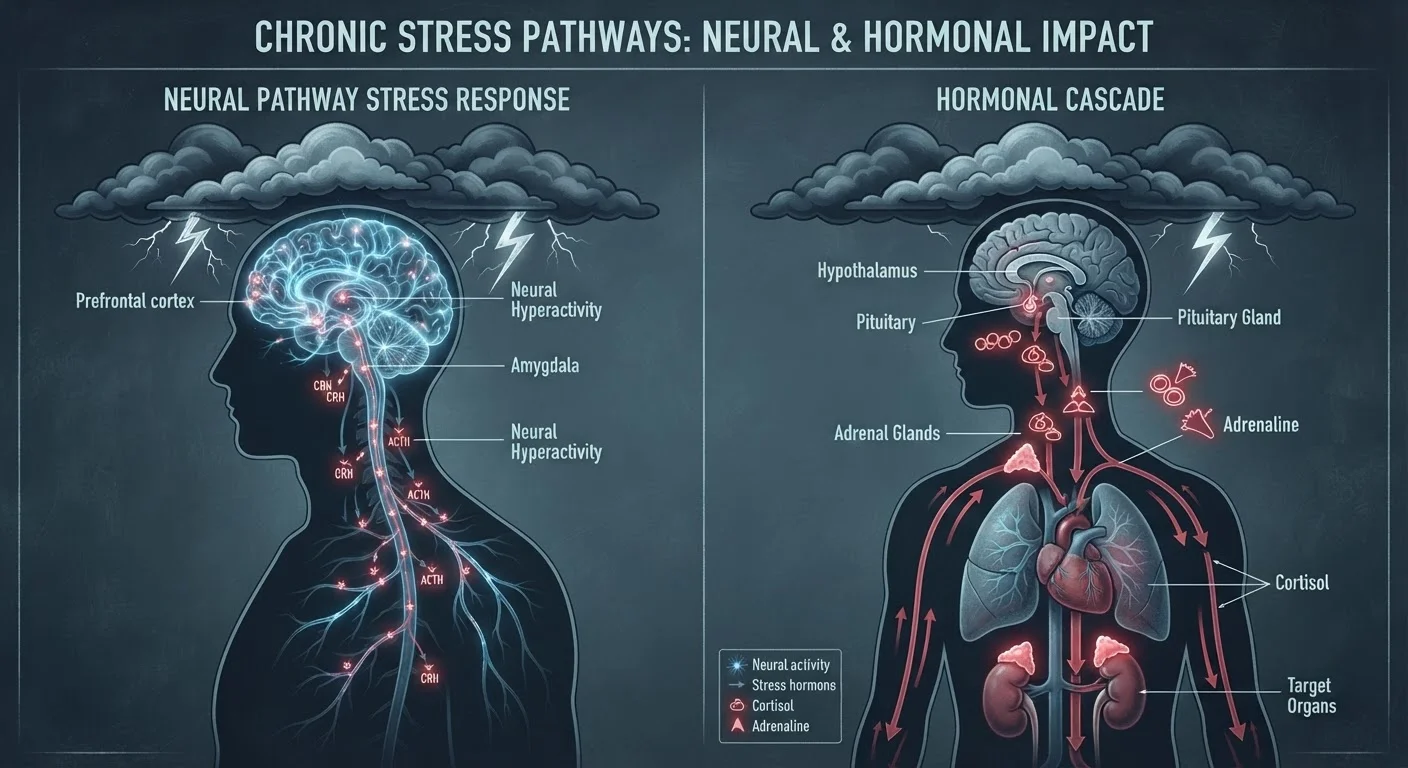
The human stress response is one of biology's most effective short-term survival tools. When you perceive a threat, the hypothalamus signals the adrenal glands to flood the body with adrenaline and cortisol - sharpening focus, accelerating heart rate, and redirecting blood to muscles. This is acute stress, and it is adaptive.
The problem emerges when this response never fully switches off. Modern stressors - financial pressure, relational conflict, work demands - rarely resolve in minutes. The nervous system, unable to distinguish psychological dread from physical danger, remains in a state of continuous readiness. Cortisol stays elevated. Inflammation lingers. And the cumulative toll accumulates across every major body system.
77%
Adults reporting physical stress symptoms
According to the American Psychological Association's Stress in America survey, a large majority of US adults report experiencing physical symptoms they link to stress.
2-3×
Increased cardiovascular risk under chronic stress
Research published in peer-reviewed cardiology literature indicates that chronic psychological stress can significantly multiply the risk of major cardiovascular events.
~8%
Hippocampal volume reduction observed
Neuroimaging studies of individuals with chronic stress-related disorders have documented measurable reductions in hippocampal volume compared to low-stress controls.
What Sustained Cortisol Does to the Body
Cortisol in short bursts is beneficial - it mobilizes energy and modulates inflammation. Chronically elevated cortisol, however, becomes disruptive. Research consistently links prolonged cortisol exposure to impaired immune surveillance, meaning the body becomes less effective at identifying and neutralizing pathogens. Wound healing slows. Susceptibility to illness increases.
Cardiovascular effects are equally significant. Sustained activation of the sympathetic nervous system raises resting blood pressure and heart rate, contributes to arterial inflammation, and accelerates the conditions that underlie heart disease. The digestive system is also vulnerable: chronic stress alters gut motility, disrupts the gut microbiome, and can worsen conditions such as irritable bowel syndrome.
Sleep architecture suffers too. Elevated evening cortisol interferes with the drop in arousal needed to enter deep, restorative sleep stages - creating a feedback loop where poor sleep further elevates stress hormones the following day.
The Recovery Window Matters
Brief bouts of stress followed by genuine recovery periods are unlikely to cause lasting harm. The physiological danger emerges when recovery is chronically blocked - by overwork, poor sleep habits, or unaddressed emotional strain. Protecting even short daily periods of genuine downtime supports the nervous system's ability to reset.
How Chronic Stress Reshapes the Brain
Perhaps the most striking finding from neuroscience research is that chronic stress can physically alter brain structure. The hippocampus - a region central to memory formation and emotional regulation - is particularly vulnerable. Prolonged cortisol exposure has been associated with reduced hippocampal volume in studies of people with stress-related conditions, impairing both recall and the ability to contextualize fear responses.
The prefrontal cortex, responsible for rational decision-making and impulse control, also shows functional changes under sustained stress - becoming less effective at moderating the amygdala's alarm signals. Simultaneously, the amygdala itself can become hyperreactive, lowering the threshold for perceived threat. The net result is a brain that is harder to calm, quicker to react, and less able to think clearly under pressure.
The encouraging note: neuroplasticity means these changes are not necessarily permanent. Evidence-based approaches - including those described in research on CBT and mindfulness-based stress reduction - have demonstrated measurable effects on stress-related brain function.
Recognizing the Compounding Effect - and What to Do
One of chronic stress's most insidious qualities is that its effects compound. Disrupted sleep impairs emotional regulation, which makes stressors feel larger, which elevates cortisol further - a cycle that can gradually erode resilience. This is part of why a prolonged stressful period can escalate into something more serious. If you want to understand where that threshold lies, signs that stress has crossed into burnout offers useful grounding.
Intervention does not require a dramatic overhaul. Controlled breathing practices work through measurable physiology - activating the parasympathetic nervous system and lowering heart rate variability. The science behind why deep breathing calms the nervous system explains that mechanism in detail. Similarly, regular physical exercise has strong evidence behind it as a modulator of stress hormones and mood.
Acknowledging that chronic stress has real, measurable biological consequences is not cause for alarm - it is a call to take it seriously. If stress-related symptoms are affecting your daily life, speaking with a qualified healthcare professional is the most appropriate starting point.
This article is for general informational and educational purposes only and does not constitute medical advice. Always consult a qualified healthcare professional for guidance about your personal health.