
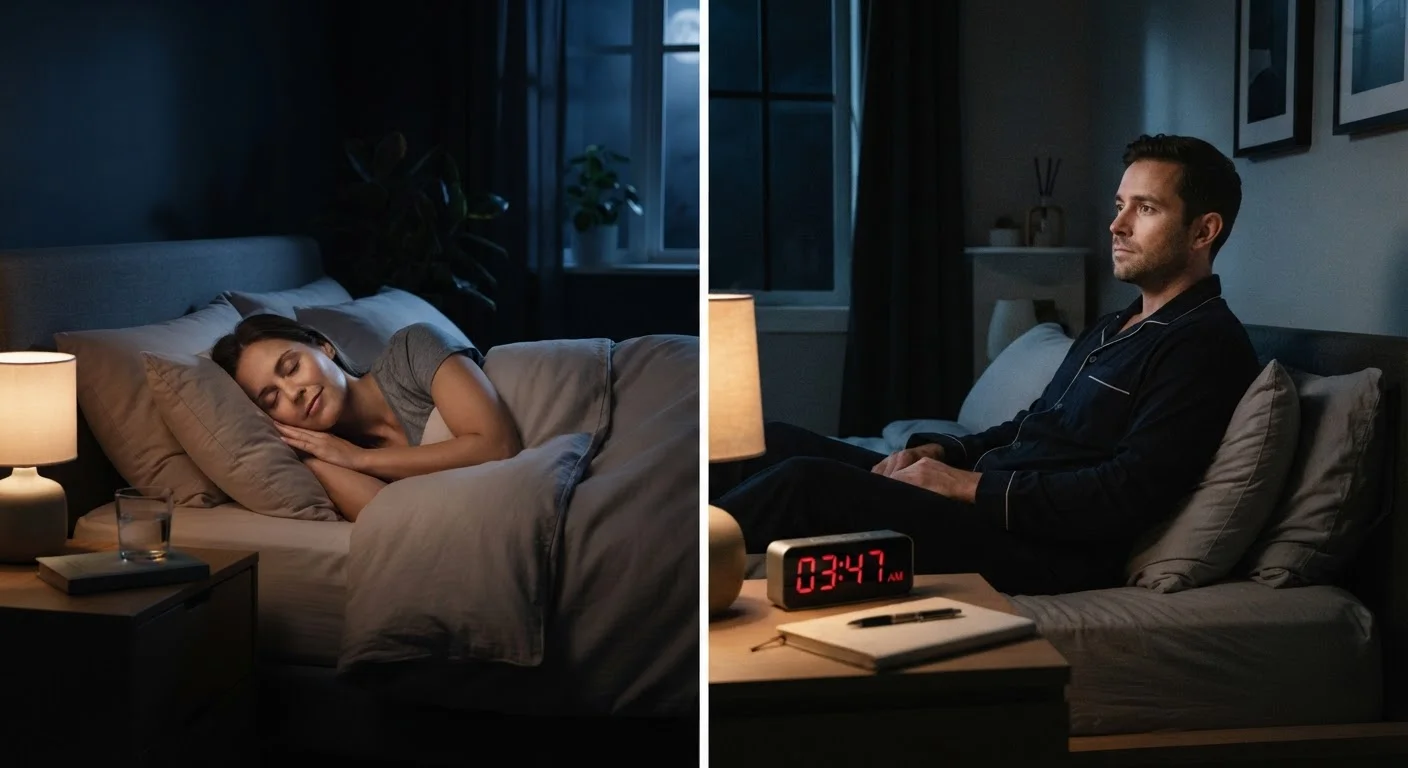
What Is Sleep Hygiene?
Sleep hygiene refers to a collection of behavioral and environmental practices designed to support regular, restorative sleep. The concept emerged from behavioral medicine and encompasses habits like maintaining a consistent sleep-wake schedule, limiting caffeine late in the day, reducing screen exposure before bed, and keeping the bedroom cool, dark, and quiet.
These recommendations function as a preventive framework - they lower the likelihood of sleep disruption by aligning daily routines with the body's natural circadian rhythms. For a structured pre-sleep wind-down routine that puts these principles into practice, behavioral sleep science offers clear guidance on sequencing and timing.
Sleep hygiene works best as a foundational layer. Research indicates that while good sleep habits support overall sleep health, they are generally insufficient on their own to resolve established, chronic insomnia disorder. They reduce friction but don't necessarily rebuild a dysregulated sleep system.
Sleep Hygiene Has Real Limits
Public health messaging often presents sleep hygiene as the solution to all sleep problems, but clinical research tells a more nuanced story. A 2021 review published in Sleep Medicine Reviews found that sleep hygiene education alone produced only modest benefits for people with diagnosed insomnia. This does not make the practices worthless - rather, it highlights that chronic insomnia typically requires a more targeted clinical approach beyond behavioral tips.
What Is Sleep Restriction Therapy?
Sleep restriction therapy (SRT) is a structured clinical intervention developed in the 1980s by sleep researcher Arthur Spielman. It works by initially limiting the time a person spends in bed to roughly match their actual sleep time - not their desired or ideal sleep duration. This deliberate restriction builds homeostatic sleep pressure, the biological drive for sleep that accumulates the longer a person stays awake.
As sleep becomes more consolidated and efficient, the prescribed time in bed is gradually extended. The goal is to break the cycle of lying awake in bed, which, in chronic insomnia, creates a conditioned association between the bed and wakefulness or anxiety.
SRT is a primary component of Cognitive Behavioral Therapy for Insomnia (CBT-I), which major sleep medicine organizations - including the American Academy of Sleep Medicine - recognize as the first-line treatment for chronic insomnia. To understand how CBT fits into broader behavioral health treatment, see the comparison of CBT and mindfulness-based approaches.
70-80%
Chronic insomnia improvement rate with CBT-I
Research consistently shows CBT-I - which includes sleep restriction therapy - produces clinically meaningful improvement in the majority of chronic insomnia patients.
~30%
Adults reporting occasional insomnia symptoms
According to estimates from the American Academy of Sleep Medicine, roughly one-third of adults experience occasional insomnia symptoms, while a smaller proportion meet criteria for insomnia disorder.
Key Differences Between the Two Approaches
The most important distinction is intensity and mechanism. Sleep hygiene works gradually by reducing environmental and behavioral barriers to sleep. Sleep restriction therapy works acutely by deliberately engineering sleep pressure through controlled deprivation, then rebuilding sleep architecture in a more consolidated form.
| Criterion | Sleep Hygiene | Sleep Restriction Therapy |
|---|---|---|
| Primary purpose | Prevent and reduce mild sleep disruption | Treat chronic insomnia disorder |
| Mechanism | Reduce barriers to natural sleep onset | Build homeostatic sleep pressure through time-in-bed restriction |
| Evidence level for chronic insomnia | Limited as standalone treatment | Strong; core component of first-line CBT-I |
| Clinical supervision needed | Generally not required | Strongly recommended |
| Short-term side effects | Minimal | Temporary increase in daytime sleepiness |
| Time to effect | Gradual, over weeks to months | Typically several weeks with structured protocol |
Sleep hygiene is broadly appropriate for almost anyone and carries no clinical risk. Sleep restriction therapy, by contrast, can temporarily increase daytime sleepiness and should not be applied without professional guidance - particularly for individuals with certain conditions such as epilepsy, bipolar disorder, or safety-critical occupations requiring sustained alertness. Always consult a qualified healthcare professional before beginning sleep restriction therapy.
Which Approach Is Right for You?
If your sleep difficulties are mild, situational, or linked to identifiable lifestyle factors - irregular schedules, evening screen use, high caffeine intake - improving sleep hygiene is a reasonable and low-risk starting point. Many people see meaningful improvements by addressing these variables consistently over several weeks.
If your insomnia has persisted for three months or longer, occurs at least three nights per week, and causes significant daytime impairment, the clinical threshold for insomnia disorder may apply. In that case, sleep restriction therapy within a CBT-I program is supported by substantial evidence as the most effective non-pharmacological intervention available.
Both approaches are not mutually exclusive. In clinical practice, good sleep hygiene typically accompanies sleep restriction therapy as a supporting structure. The distinction matters because conflating the two - treating basic lifestyle tips as equivalent to structured therapy - can leave people with chronic insomnia under-treated for years.
This article is for general informational and educational purposes only and does not constitute medical advice. If you are experiencing persistent sleep difficulties, consult a qualified healthcare or sleep medicine professional for evaluation and personalized guidance.