
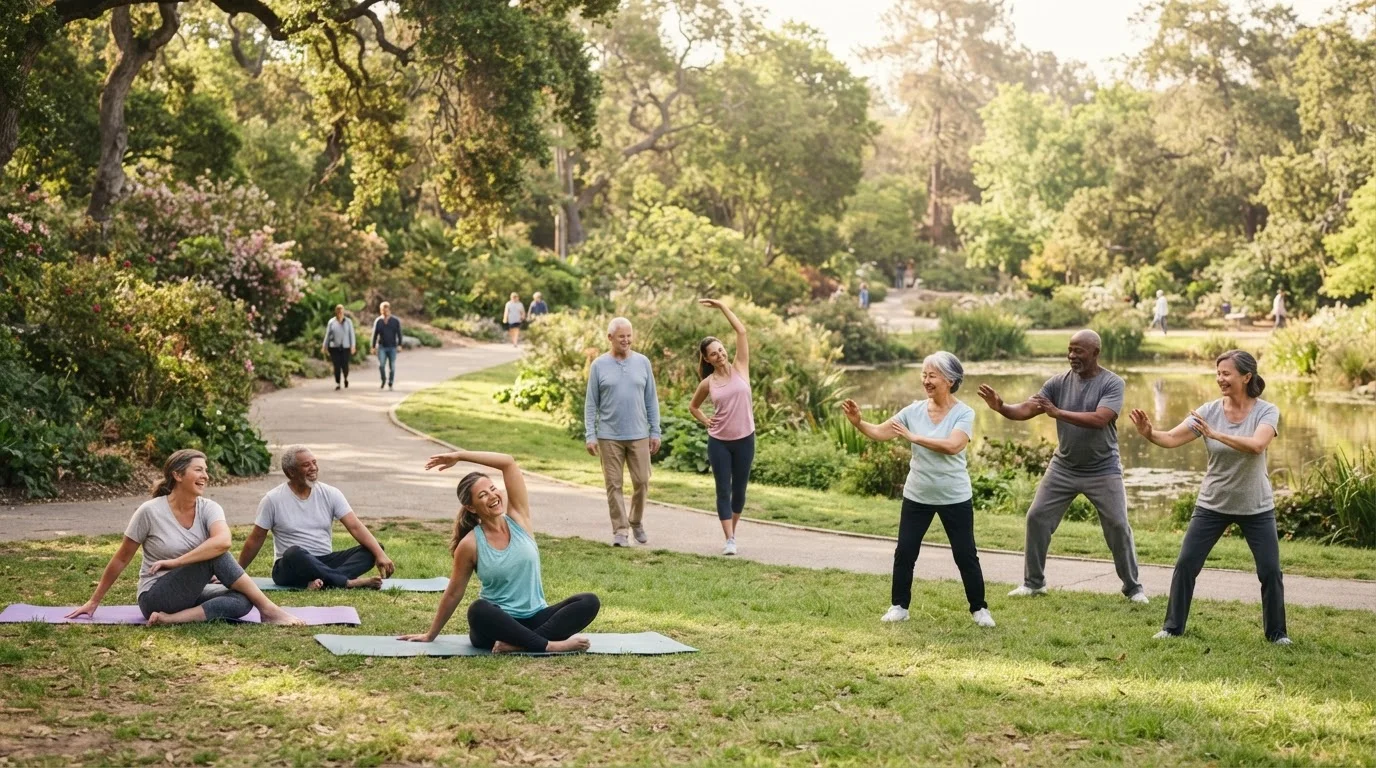
Why Low-Impact Movement Matters at Every Age
Low-impact exercise - movement that keeps at least one foot on the ground or reduces joint loading through water, resistance, or controlled motion - is not a compromise. For a wide range of people, it is simply the most sustainable and appropriate form of physical activity available. That includes older adults managing joint conditions, younger adults recovering from injury, pregnant individuals, those managing chronic illness, and beginners who need a gentle on-ramp to regular movement.
Research consistently supports the cardiovascular, musculoskeletal, and mental health benefits of regular moderate-intensity movement, regardless of its impact level. Yet many people still associate effective exercise with high intensity, which can create barriers where none need to exist. Understanding which low-impact options fit different bodies and life stages is a practical step toward making fitness genuinely approachable. See our comparison of intensity approaches for a fuller picture of how effort level affects outcomes.
Walking - the most accessible entry point
Walking remains one of the most evidence-supported forms of low-impact movement across virtually every adult age group. It requires no equipment beyond supportive footwear, can be performed indoors or outdoors, and is easy to scale by adjusting duration or terrain. For adults in their 20s and 30s, brisk walking serves as reliable active recovery between higher-intensity training days. For those in their 50s, 60s, and beyond, it supports cardiovascular health, bone density maintenance, and balance without imposing significant joint load.
Walking poles (common in Nordic walking) can further reduce lower-limb stress while engaging the upper body - a useful adaptation for those with hip or knee concerns.
Walking scales effortlessly across age groups and requires no equipment beyond supportive footwear.
Swimming and water-based exercise
Aquatic exercise is among the most joint-friendly movement options available. Water's buoyancy reduces effective body weight substantially, lowering compressive forces on the spine, hips, and knees. This makes swimming and water aerobics especially valuable for older adults with osteoarthritis, individuals managing obesity, those in late-stage pregnancy, and anyone recovering from lower-body injury.
Water also provides natural resistance in all directions, meaning sessions can build muscular endurance alongside cardiovascular fitness. Community pools often offer structured water aerobics classes designed for seniors or rehabilitation populations, which adds a social dimension that supports long-term adherence.
Water buoyancy substantially reduces joint loading, making aquatic exercise uniquely suitable for arthritis, injury recovery, and pregnancy.
Yoga and tai chi for mobility and balance
Both yoga and tai chi emphasize controlled, deliberate movement - making them excellent tools for improving flexibility, balance, and proprioception (the body's sense of its own position in space). Balance and proprioception tend to decline with age, and their deterioration is a major risk factor for falls in older adults. Evidence from multiple studies supports tai chi in particular as an effective fall-prevention intervention for people over 65.
Yoga's variety is also a genuine asset: restorative and chair yoga styles are accessible to people with significant mobility limitations, while more dynamic practices can challenge younger or more conditioned adults. Our article on flexibility, mobility, and stretching explains how these movement qualities differ and why each matters.
Tai chi has demonstrated effectiveness as a fall-prevention tool for older adults in multiple research studies.
Resistance bands and bodyweight training
Strength training is essential across the lifespan - preserving lean muscle mass, supporting bone density, and maintaining functional capacity for daily tasks. Resistance bands offer an accessible, low-cost entry into progressive strength work that places minimal stress on joints compared with free weights or machine-based lifting.
For teens and young adults establishing fitness habits, bands provide a safe introduction to resistance training mechanics. For middle-aged adults managing joint discomfort, they allow continued strength work without aggravating existing issues. For older adults, they support the muscle preservation needed to remain independent. Many band exercises can also be performed seated, making them viable for people with limited mobility. If you prefer exercising at home, our guide to home workout spaces covers how to set up effectively without a lot of room or equipment.
Resistance bands allow progressive strength training with minimal joint stress - and can be done seated for those with mobility limitations.
Cycling - stationary or outdoors
Cycling is a low-impact cardiovascular option that loads the legs without the repetitive ground-strike forces of running. Stationary cycling, in particular, offers a controlled environment where seat height and resistance can be adjusted to minimize knee strain - a critical feature for those managing patellofemoral issues or recovering from lower-limb injury.
Recumbent bikes provide additional back support, making them a strong option for older adults or those with lumbar concerns. For younger adults seeking higher intensities without impact, structured stationary cycling classes can deliver significant cardiovascular challenge while remaining joint-friendly.
Stationary cycling lets users control resistance and seat position precisely, reducing knee strain without sacrificing cardio intensity.
Chair-based and seated exercise programs
For individuals with significant mobility limitations - including some older adults, those in post-surgical recovery, and people managing certain neurological or chronic conditions - chair-based exercise programs offer a genuine pathway to regular physical activity. These programs can target upper-body strength, cardiovascular endurance, and even core stability while seated, removing the balance demands that make standing exercise risky for some individuals.
Chair yoga and seated aerobics classes are increasingly available through community centers, physical therapy practices, and online platforms. They are not a last resort - they are a legitimate and effective modality for the populations they serve. Anyone with a medical condition limiting their standing capacity should consult a healthcare provider or physical therapist to identify appropriate chair-based options.
Chair-based programs are a legitimate, effective modality - not a fallback - for those with significant mobility limitations.
Finding the Right Fit for Your Stage and Goals
The options listed above are starting points, not prescriptions. Most people will draw from several of them simultaneously - combining walking with resistance band work, or pairing swimming with yoga - rather than committing to a single method. What matters most is finding a combination that feels manageable, keeps you coming back, and fits your actual schedule. Our guide to building a weekly routine offers practical frameworks for structuring movement around real life demands.
If you are managing a health condition, recovering from surgery, pregnant, or new to exercise after a long break, speak with a qualified healthcare provider before beginning any new physical activity program. They can help identify which options are appropriate for your specific situation and flag any necessary modifications.
Start Where You Are, Not Where You Think You Should Be
One of the most common barriers to starting a movement routine is the belief that it needs to look a certain way. Any consistent, manageable movement is more valuable than an ideal program that never gets started. Even two or three sessions per week of gentle, low-impact activity produces measurable health benefits over time. Choose what fits your body and schedule, then build gradually from there.
This article is for general informational purposes only and does not constitute medical advice. Always consult a qualified healthcare professional before making changes to your exercise habits, especially if you have a medical condition or injury.