Why Patch Testing Is Worth the Wait
Most skincare reactions are not random - they follow a pattern. A new product is applied, the skin responds within hours or days, and the connection is often missed because multiple products were introduced at once or because the reaction appeared on the face rather than where the product was first tested. Patch testing interrupts this cycle by creating a controlled, low-risk introduction.
Skin reactions generally fall into two categories. Irritant contact dermatitis occurs when a product physically disrupts the skin barrier - common with high-concentration acids, alcohol-based toners, or certain preservatives. Allergic contact dermatitis is an immune response to a specific ingredient, which can develop even after years of using a product without issue. Neither type is a sign of weakness or bad skin; both are manageable with careful product introduction.
It's worth noting that 'natural' does not mean non-reactive. As explored in our piece on common skincare myths, plant-derived ingredients - including essential oils, botanical extracts, and fruit enzymes - are among the more frequent causes of contact reactions. Every ingredient, regardless of origin, is a chemical compound your skin may or may not tolerate.
Seek Help for Severe Reactions
If you develop hives, significant swelling, difficulty breathing, or widespread redness after applying any skincare product, stop use immediately and seek medical attention. These symptoms may indicate a serious allergic response. This article provides general educational information - it is not medical advice. Consult a dermatologist if you have persistent skin concerns.
How to Patch Test: Step-by-Step
The process takes about five minutes of active effort, followed by a waiting period. Gather what you need before starting.
What you will need
Cotton swab or clean fingertip
Used to apply a small, controlled amount of product to the test site without contaminating the bottle.
Mild, fragrance-free cleanser
Cleans the patch test area before application to remove oils, sunscreen, or residue that could affect results.
Hydrocortisone 1% cream (OTC)
Available over the counter as a short-term option to calm mild irritation if a reaction develops; consult a pharmacist before use.
Choose and clean your test site
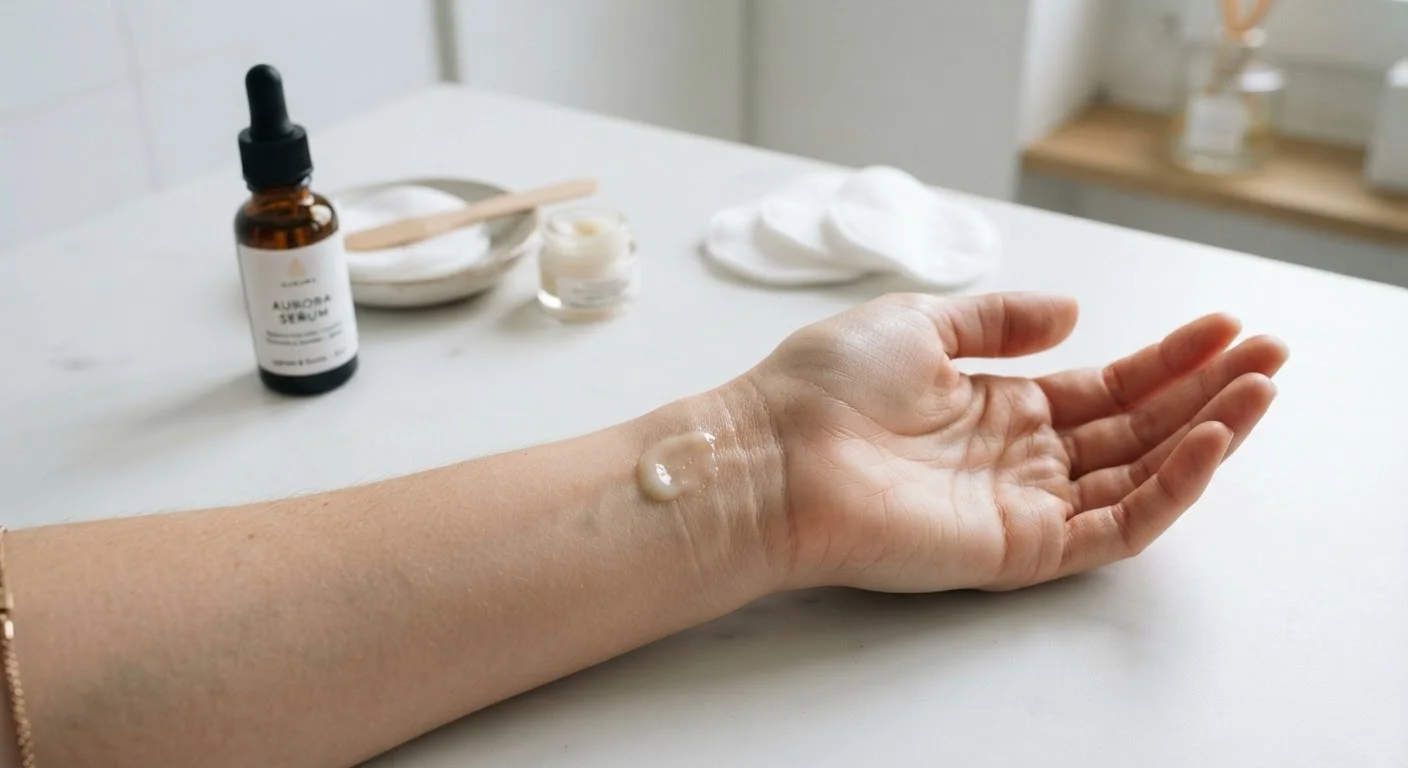
Select the inner forearm - the crook of the elbow or the soft skin midway to the wrist. This area is sensitive enough to reflect how skin elsewhere may respond but is easily covered and won't affect your complexion if mild redness occurs. Behind the ear is a common alternative, particularly for facial products.
Wash the site with a mild, fragrance-free cleanser and pat it completely dry. Wait five minutes before proceeding so the skin is fully settled.
Apply a small, coin-sized amount of product
Using a clean cotton swab or freshly washed fingertip, apply a small amount of the product - roughly the size of a dime - to the test site. Use the same concentration you intend to use in your actual routine; do not dilute it, as a diluted test may not reveal a true reaction.
For leave-on products like serums, moisturizers, or retinoids, apply as directed and leave undisturbed. For rinse-off products like cleansers or masks, apply and leave on for the duration you'd normally use them, then rinse.
Observe for 24-48 hours
Check the test site at regular intervals: at 30 minutes, at 6-8 hours, and again at 24 and 48 hours. Note any changes in skin texture, color, or sensation. Signs that may warrant stopping use include:
- Redness or pink discoloration that doesn't fade
- Itching, burning, or stinging
- Swelling, raised bumps, or hives
- Dry, flaky, or peeling skin at the site
Mild, transient tingling - particularly with AHAs or BHAs - can be normal in small amounts, but sustained discomfort is not.
Evaluate your results
If the site shows no redness, swelling, or irritation at the 48-hour mark, it is generally reasonable to proceed with using the product as directed. A clear patch test reduces - but does not eliminate - the possibility of a broader reaction when the product is applied over a larger skin area.
If you notice any of the warning signs listed above, discontinue testing, gently cleanse the area, and allow skin to recover before considering an alternative product. If irritation persists beyond a few days, consult a dermatologist.
Introduce the product gradually into your routine
Even with a clear patch test, begin use slowly - once every other day or every two to three days, especially for active ingredients like retinoids, vitamin C, or chemical exfoliants. This allows your skin barrier to acclimate without becoming overwhelmed.
Understanding how ingredients interact is equally important. Our guide to pairing skincare ingredients safely walks through which combinations to embrace and which to separate in your routine.
Don't Rely on 'Hypoallergenic' Labels Alone
The term 'hypoallergenic' is not regulated by a federal standard in the US, meaning it carries no guaranteed safety claim. Products marketed as gentle or natural can still contain fragrance compounds, essential oils, or preservatives that trigger reactions in sensitive individuals. Always patch test regardless of label claims.
Once you've established a stable routine, patch testing every new addition remains worthwhile - including reformulated versions of products you've used before. Manufacturers occasionally change ingredient lists without prominently flagging it, and a previously safe product may contain a new sensitizer. Habits like these pair well with the broader advice in our guide on routine habits that backfire, which covers other easily overlooked missteps.
Test One New Product at a Time
Introducing multiple new products simultaneously makes it nearly impossible to identify which one caused a reaction. Space new additions at least one week apart. This approach also mirrors the guidance in our beginner skincare guide on building a routine incrementally.
This article is for general informational purposes only and is not a substitute for professional medical or dermatological advice. If you experience persistent or severe skin reactions, consult a qualified healthcare provider.