
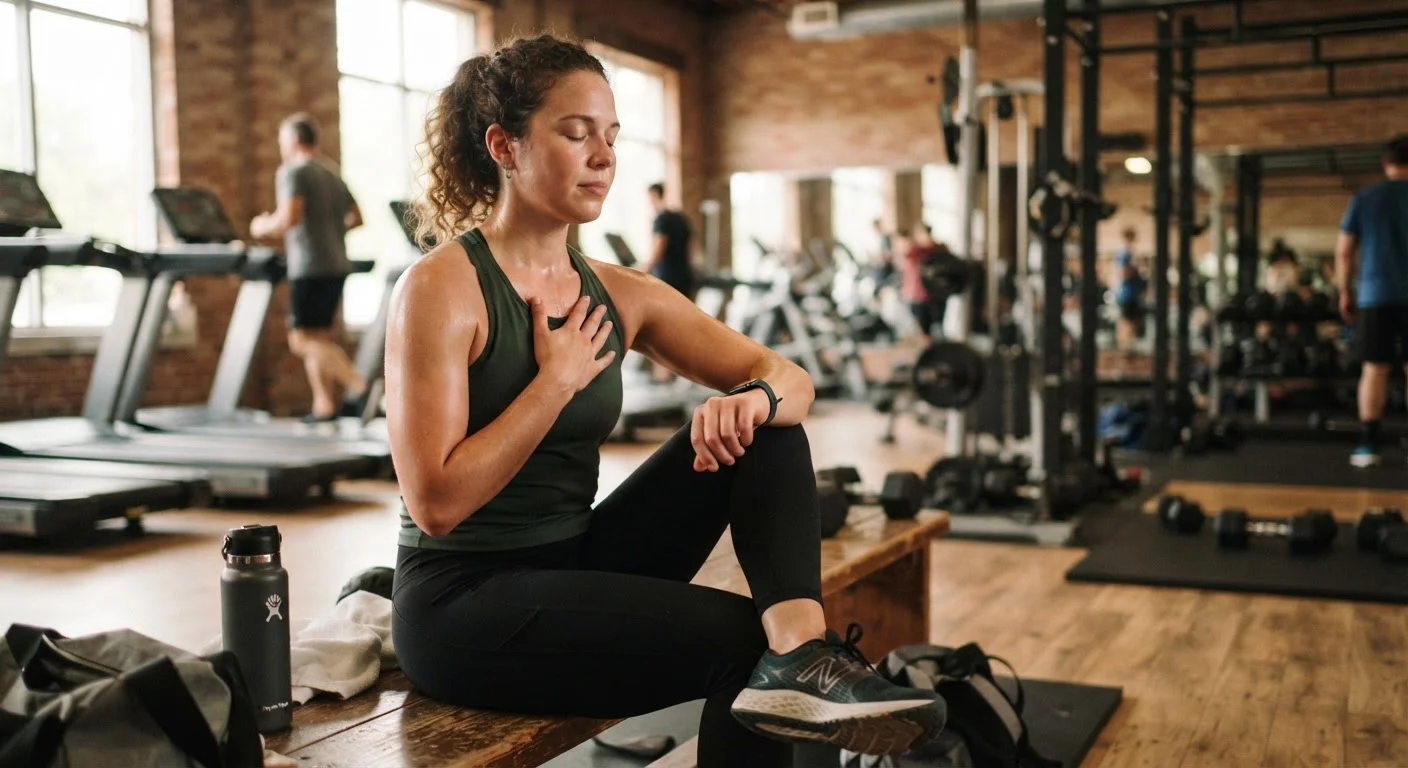
Why Body Awareness Is a Fitness Skill
Most fitness guidance focuses on what to do - the exercises, the sets, the schedule. Far less attention goes to how to interpret what your body is telling you while you do it. Yet that feedback loop is what separates training that builds you up from training that wears you down.
Body awareness during exercise isn't an innate gift. It's a learned skill, and like any skill, it improves with deliberate practice. The goal isn't to second-guess every sensation - it's to develop a reliable internal vocabulary so that you can respond intelligently to what's actually happening, rather than defaulting to either pushing blindly or quitting unnecessarily.
The signals your body generates during a workout fall into a few broad categories: normal effort cues, useful warning signals worth monitoring, and red-flag indicators that require immediate action. Getting clear on each category is the foundation of smarter, safer training.
Discomfort and Pain Are Not the Same Thing
Productive discomfort - muscle fatigue, elevated breathing, the effort of a hard set - is an expected part of training. Pain, especially if sharp, sudden, or joint-located, is a different signal entirely. Learning to tell these apart is a skill that develops with practice and pays long-term dividends for your safety and progress.
What You'll Need Before You Start
Reading your body's signals during a workout doesn't require special equipment, but a few tools can support the process - particularly when you're building this habit for the first time.
What you will need
Rate of Perceived Exertion (RPE) Scale
A simple 1-10 self-assessment tool to gauge how hard you feel you are working at any moment during exercise.
Heart Rate Monitor or Fitness Tracker
Provides objective data on cardiovascular intensity to cross-check how your perceived effort aligns with actual heart rate zones.
Training Journal or Notes App
Allows you to log how your body felt session to session, helping you identify patterns in fatigue, pain, or performance.
Step-by-Step: How to Read Your Body During Exercise
Follow these steps during your next session to start building a more accurate, responsive relationship with your body's feedback. Each step can be practiced independently, but together they form a complete in-workout awareness practice.
Establish a baseline before you begin
Before your session starts, take 60 seconds to do a quick internal check-in. Notice your energy level, any existing tightness or soreness, and your overall mood. These observations become your reference point. If something feels markedly different mid-workout, you'll have context to interpret it accurately. See our pre-workout preparation checklist for a structured way to set this foundation before every session.
Distinguish muscle burn from joint or bone pain
As effort increases, a diffuse burning sensation in the working muscle is a normal response to metabolic stress. It typically affects both sides of the body symmetrically and fades quickly with rest. Pain that is sharp, stabbing, located in or around a joint, or isolated to one side is a different category entirely. That type of signal warrants stopping the movement and assessing before continuing. This distinction is the cornerstone of body awareness during exercise.
Monitor your breathing as a real-time intensity gauge
Your breathing pattern is one of the most accessible indicators of workout intensity. At moderate effort, you should be able to speak in short phrases - this is often called the "talk test." If you can hold a full conversation, you may have room to increase effort. If you cannot get a word out or feel unable to catch your breath even after slowing down, you may be working beyond a sustainable level. Labored breathing that persists after you stop exercising is a signal to rest and, if it continues, to seek medical attention.
Use perceived exertion to guide your effort
The Rate of Perceived Exertion (RPE) scale - typically rated 1 to 10 - asks you to assess how hard you feel like you're working. Most general fitness goals are served by spending time in the 5-7 range, where effort feels challenging but sustainable. Pushing regularly into 9-10 without adequate recovery can lead to accumulated fatigue or overuse issues. RPE is subjective by design: it accounts for factors like sleep quality, stress, and hydration that a heart rate monitor cannot capture.
Recognize red-flag signals that require stopping
Certain signals should always prompt you to stop exercise immediately and, depending on severity, seek medical evaluation. These include: chest pain or tightness, dizziness or lightheadedness that doesn't resolve with slowing down, sudden nausea, heart palpitations, numbness or tingling in the arms or face, or any sensation of pressure in the chest or upper body. These are not signs of a hard workout - they are potential indicators of conditions that require professional assessment. This article is for general informational purposes and is not a substitute for medical advice.
Adjust and log what you observed
At the end of your session, spend two minutes recording how your body responded. Note where you felt challenged, any sensations that concerned you, and how your energy tracked across the session. Over time, this log reveals patterns - such as consistent fatigue on certain days or recurring tightness in a specific area - that help you and any fitness or healthcare professional make informed adjustments. For context on post-workout soreness versus something more concerning, see our article on what causes delayed muscle soreness.
When to Sit Out Instead of Push Through
If you arrive at a workout already feeling unwell, running a fever, or nursing acute pain, the most productive choice is often rest. Training on top of illness or injury can slow recovery and increase the risk of a more serious setback. For a deeper look at this balance, see our piece on training through discomfort vs. knowing when to rest.
These Signals Always Mean Stop
Chest pain or pressure, sudden dizziness, heart palpitations, numbness in the arms or face, and unexplained shortness of breath that persists after you slow down are not signs of a hard effort - they may indicate a serious medical issue. Stop exercising immediately and consult a healthcare professional. Do not attempt to finish your workout.
Building This Habit Over Time
The first few times you deliberately tune into your body during a workout, it may feel distracting or even anxiety-inducing. That's normal. With repetition, the check-ins become quick and intuitive - more like scanning a dashboard than deliberate analysis.
Consistency matters more than perfection here. Even imperfect notes and rough RPE ratings from session to session accumulate into genuinely useful data. You'll begin to notice what "a good workout day" feels like in your body versus what fatigue, dehydration, or overreaching feels like - and that knowledge directly informs better decisions about when to push, when to scale back, and when to rest entirely.
This article is for general informational and educational purposes only and is not a substitute for professional medical advice. If you experience pain, unusual symptoms, or have any health concerns related to exercise, consult a qualified healthcare provider before continuing your fitness routine.