
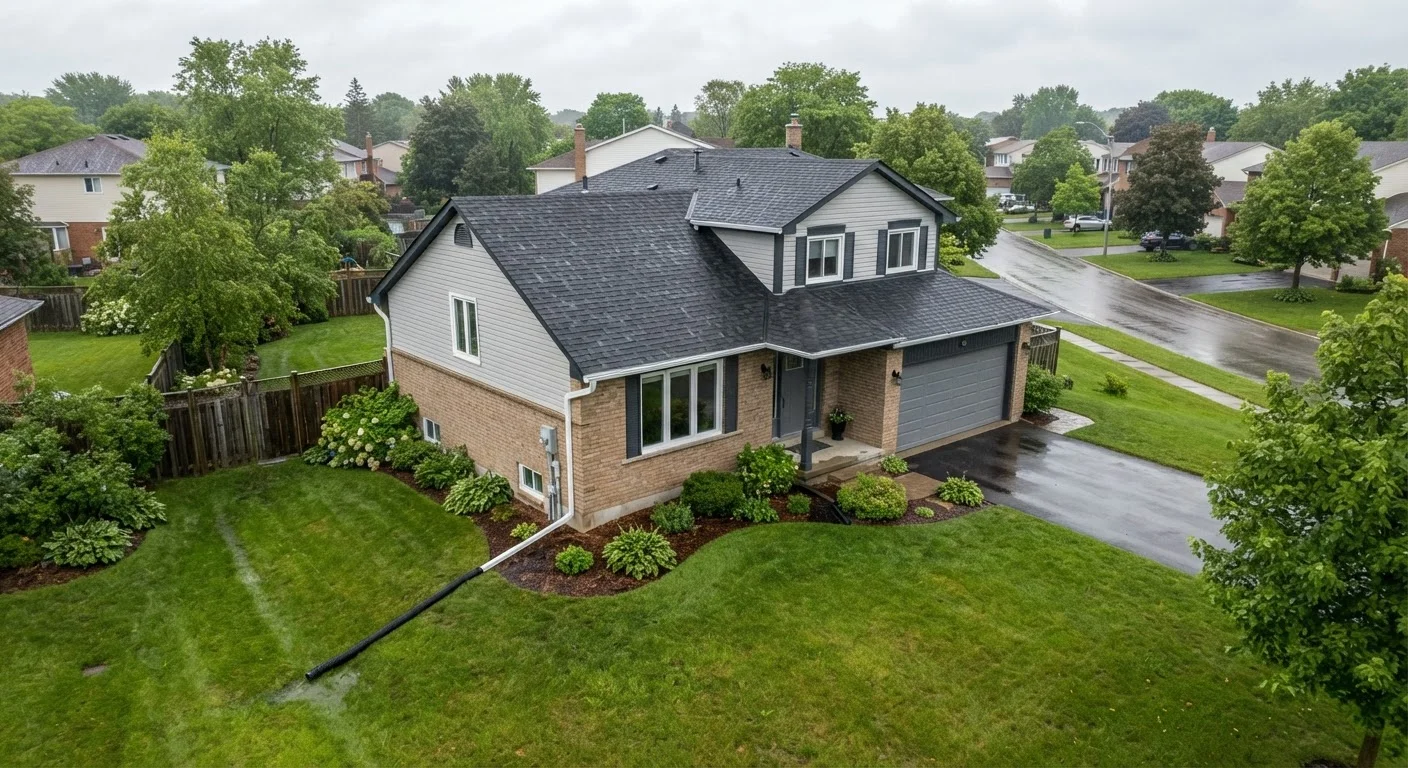
The Role of Gutters: Collecting Runoff at the Roofline
Every time it rains, your roof sheds a substantial volume of water. On a 2,000-square-foot home, a single inch of rainfall can produce more than 1,200 gallons of runoff. Without gutters, that water cascades off the eaves in sheets, saturating the soil directly against your foundation.
Gutters are troughs-usually aluminum, vinyl, steel, or copper-attached along the lower edge of the roof. Their job is simple in principle: intercept runoff before it reaches the ground and funnel it to a controlled exit point. But their effectiveness depends on two factors often overlooked by homeowners: capacity and cleanliness.
A standard 5-inch K-style gutter handles typical residential rainfall in most US climates, but homes in high-rainfall regions or with steeply pitched roofs may require 6-inch gutters. Undersized gutters overflow during heavy rain, defeating their purpose entirely. Clogged gutters do the same-water backs up, spills over, and can even seep beneath the roof edge, damaging fascia boards and soffits. This is why routine cleaning, discussed later, is non-negotiable.
Check Gutter Hangers After Heavy Storms
Strong winds and the weight of wet debris can loosen gutter spikes and hangers. A quick visual inspection after major storms-looking for sections that dip or pull away from the fascia-can catch minor attachment issues before they become expensive repairs. Hangers are inexpensive and straightforward to replace if caught early.
Downspouts: The Exit Path for Collected Water
Downspouts are the vertical pipes that carry water from the gutter to ground level. They are typically installed at corners and at intervals no greater than 30 to 40 feet of gutter run-longer spans without a downspout mean water has too far to travel and may overflow midway.
The critical issue with downspouts isn't where they start, but where they end. A downspout that terminates flush against the foundation essentially delivers roof runoff to the worst possible location. Extensions-whether rigid aluminum elbows, flexible accordion-style tubes, or buried underground pipes-are essential for directing water away from the structure.
Underground drains connected to downspouts offer the cleanest solution in terms of appearance and effectiveness, routing water to a dry well, a street curb drain, or a rain garden. However, these systems require proper installation to avoid backflow or blockage, and in some municipalities may require permits. Simpler above-ground extensions work well for most homes when kept clear and angled correctly.
1,200+
Gallons of runoff per inch of rain on a 2,000 sq ft roof
Calculated using the standard formula: roof area (sq ft) × rainfall (inches) × 0.623, a widely used estimation method in residential hydrology.
6 inches
Recommended soil drop over first 10 feet from foundation
This grading guideline is referenced by the International Residential Code and widely cited by home inspectors as a baseline for adequate surface drainage.
4-6 feet
Minimum downspout extension distance from foundation
Many building professionals recommend extending to 10 feet for homes with basements or in areas with heavy rainfall or clay-heavy soils.
Grading and Surface Drainage: The Ground-Level Layer
Even a perfectly maintained gutter and downspout system can fail if the ground around your home doesn't cooperate. Grading-the slope of the soil immediately surrounding the foundation-is the final and often overlooked layer of your home's water management system.
The general guideline widely cited by builders and home inspectors is a minimum 6-inch drop over the first 10 feet away from the foundation. This slope ensures that surface water-whether from rain, snowmelt, or irrigation-flows away from the house rather than toward it. Over time, soil settles, mulch decomposes, and low spots develop. These subtle grade changes can redirect water back toward the foundation without any visible warning.
Homeowners can address minor grading issues by adding soil and tamping it to restore the slope. However, significant regrading-especially near walkways, patios, or where underground utilities run-typically warrants professional evaluation. Compacted clay soils that drain poorly may also benefit from the addition of drainage swales or French drains (perforated pipes buried in gravel trenches that redirect subsurface water).
For a broader look at how exterior maintenance connects to overall home health, see the complete homeowner's maintenance reference covering every major home system.
Maintenance Habits That Keep the System Working
The entire drainage chain-roof to gutter to downspout to grade-functions as one interconnected system. Neglect in any area creates vulnerabilities throughout.
- Clean gutters twice a year: Late spring (after tree seed pods and late-budding debris clear) and late fall (after leaves drop) cover most situations. Add a third cleaning if you have significant tree canopy overhead.
- Flush downspouts after cleaning: Use a garden hose to confirm water flows freely through the entire downspout run. Slow drainage indicates a partial blockage that can worsen rapidly.
- Check extensions and splash blocks: After storms, verify that downspout extensions remain in place and angled away from the structure. Splash blocks shift over time and should be repositioned as needed.
- Inspect gutters for slope and attachment: Sagging sections hold standing water, which accelerates corrosion and adds weight. Re-pitch or re-secure sections as soon as sagging is noticed.
- Walk your perimeter after heavy rain: Look for pooling water, soil erosion channels, or wet spots near the foundation-these are early indicators of drainage failure.
Roof condition also influences drainage performance. Debris that accumulates on a low-slope roof or in roof valleys feeds directly into gutters. The upkeep habits that extend roof life are closely tied to keeping the drainage system downstream functioning properly.
Similarly, drainage maintenance connects naturally to broader plumbing awareness. For tasks that fall within a homeowner's realistic reach, the guide on plumbing maintenance tasks is a useful complement to exterior drainage care.
Permits and Codes May Apply
Some drainage improvements-particularly underground downspout drains, French drains, or significant regrading near property lines-may require permits or must comply with local stormwater management regulations. Always check with your local building department before undertaking substantial drainage work. Requirements vary significantly by municipality and climate region.