Why Foundations Crack in the First Place
Concrete is strong under compression but relatively brittle under tension. As a result, virtually all concrete foundations develop some cracking over time. The causes fall into a few broad categories:
- Shrinkage during curing: Fresh concrete loses moisture as it hardens, causing slight shrinkage and surface cracking - especially in the first few years after construction.
- Soil settlement: As the ground beneath a home compresses or shifts, uneven support can stress the foundation. Differential settlement - where one area sinks more than another - is particularly problematic.
- Hydrostatic pressure: Water-saturated soil exerts outward and inward pressure on foundation walls, which can force open existing cracks or create new ones.
- Freeze-thaw cycles: In colder climates, water that seeps into small cracks can freeze, expand, and widen the fracture over successive winters.
Knowing the origin of a crack helps professionals determine whether it is a one-time event or an ongoing, progressive problem.
~1/4 inch
Common engineer threshold for structural crack concern
Many foundation and structural engineering guidelines use a crack width of 1/4 inch as a key indicator, though location and pattern are equally considered.
25%
US homes estimated to have some foundation distress
The American Society of Civil Engineers and various building research groups have noted that a significant share of the existing US housing stock shows some form of foundation movement or cracking over time.
Cosmetic Cracks: What They Look Like and Why They're Lower Risk
The majority of foundation cracks homeowners encounter fall into the cosmetic category. These include:
- Hairline vertical cracks: Thin, narrow fractures running straight up and down, typically from concrete shrinkage. They are common in poured-concrete walls and usually pose no structural risk when narrow and stable.
- Surface map cracking (crazing): A network of fine surface cracks resembling a spiderweb, caused by rapid surface drying during the initial cure. This is largely an aesthetic issue.
- Small isolated cracks near corners of openings: Minor stress concentrations around window or door openings in a foundation are common and often stable.
The key indicators that a crack is likely cosmetic: it is narrow (under 1/8 inch), not growing, does not allow water in, and shows no displacement - meaning the two sides of the crack sit flush with each other.
Easy Way to Monitor Crack Growth
Mark both ends of any crack with a pencil line and write the date beside it. Photograph it for reference. Revisit every four to six weeks. If the crack extends past your marks or widens noticeably, that is your signal to bring in a structural engineer rather than waiting longer.
Structural Cracks: The Warning Signs That Demand Action
Some crack patterns consistently raise red flags among structural engineers and home inspectors. These include:
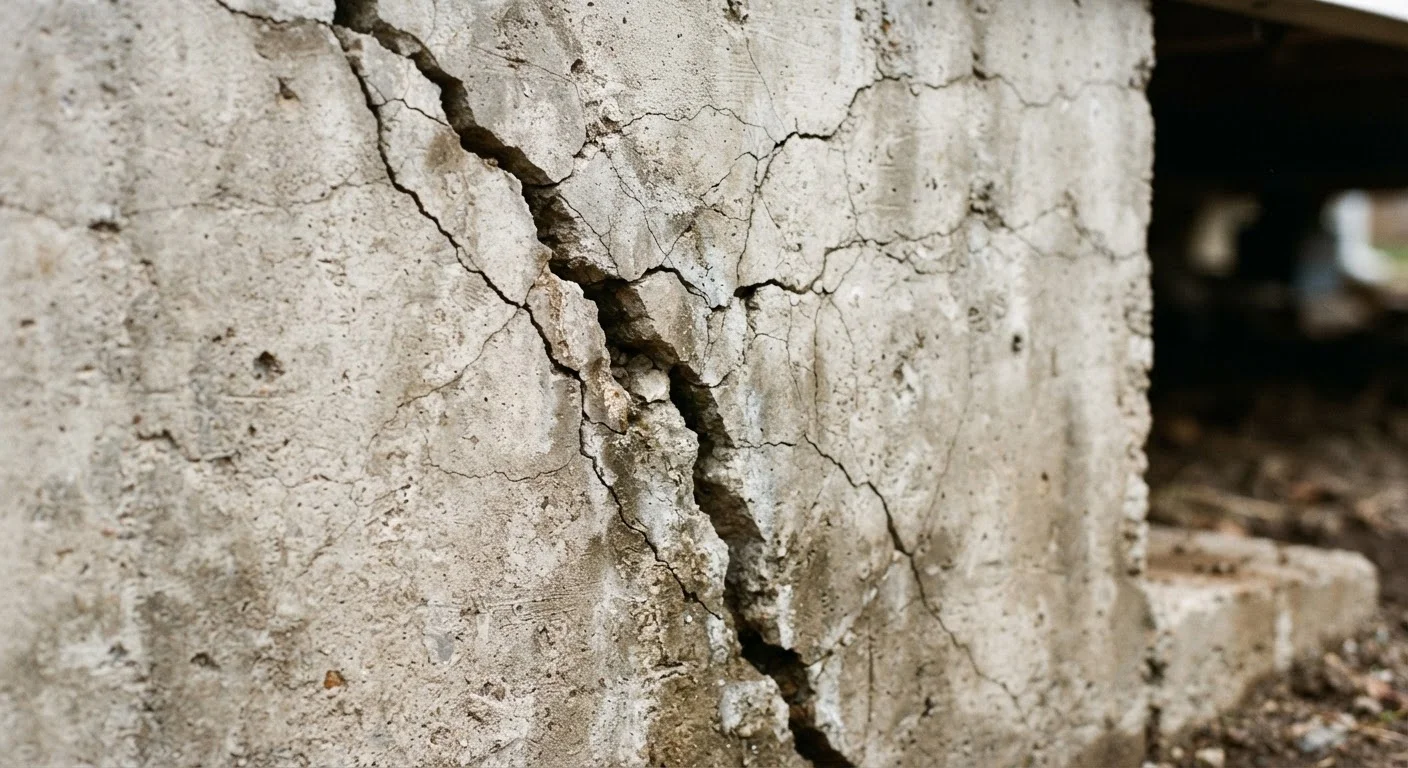
- Horizontal cracks: Particularly in block or poured-concrete basement walls, horizontal fractures signal lateral soil or water pressure that can cause a wall to bow inward. This is widely considered the most serious pattern.
- Diagonal or stair-step cracks: Diagonal cracks in poured walls, or stair-step patterns along the mortar joints of block walls, often point to differential settlement. One portion of the foundation is sinking or shifting more than another.
- Wide vertical cracks: Vertical cracks exceeding 1/4 inch - especially those with displacement where one side sits higher than the other - suggest significant movement rather than simple shrinkage.
- Cracks accompanied by bowing or bulging: Any inward deflection of a wall alongside a crack is an urgent structural concern.
Beyond geometry, active cracks - those that continue to widen or lengthen - are more concerning than cracks that have been stable for years. Seasonal fluctuation is normal, but consistent growth in one direction warrants professional assessment.
What Homeowners Should Do Next
If you discover a foundation crack, a methodical approach helps you respond appropriately without either panicking or ignoring a real problem.
- Document it: Photograph the crack and note its location, orientation, approximate length, and width. Use a coin or ruler in the photo for scale.
- Monitor it: Mark the crack ends with pencil and today's date. Check back monthly for three to six months. If the crack is growing, stop waiting and consult a professional.
- Check for water: Even cosmetic cracks can allow moisture infiltration. If you see staining, efflorescence (white chalky deposits), or dampness, address waterproofing regardless of structural status.
- Consult a licensed structural engineer or foundation specialist: For any crack that is wide, horizontal, diagonal, actively growing, or accompanied by other symptoms (sticking doors, uneven floors, wall gaps), a professional evaluation is the only reliable way to determine severity. Engineers can recommend appropriate repair strategies - from epoxy injection for stable cracks to wall anchors or underpinning for serious movement.
This article is for general informational and educational purposes only and does not constitute structural, engineering, or professional advice. Always consult a licensed structural engineer or qualified contractor for an assessment of your specific situation.